RESEARCH THEMES
The primary research focus of our group is to (1) identify the drivers and mechanisms underlying ecosystem structure and functioning, particularly under the influence of anthropogenic stressors, and (2) apply this knowledge to inform effective conservation and restoration strategies. To achieve these goals, we integrate field surveys, manipulative experiments, and meta-analytical and modeling approaches.
We are particularly interested in the long-term ecosystem consequences of human-driven changes in biodiversity, community composition, and species interactions that sustain coastal marine foundation species. Our research spans a range of ecosystem types, including seagrass meadows, oyster reefs, salt marshes, and kelp forests.

Biota-Mediated Carbon Cycling in Coastal Vegetated Ecosystems
Coastal vegetated ecosystems, including seagrass meadows, salt marshes, and mangroves, are widely recognized as important natural climate solutions because of their capacity to efficiently capture and store carbon. While substantial research has focused on how changing abiotic conditions regulate carbon cycling, stocks, and long-term storage in these ecosystems, far less is known about how biotic processes shape these functions.
Our research seeks to elucidate how species interactions, ranging from predation and herbivory to facilitation, regulate carbon cycling and storage capacity in threatened coastal vegetated ecosystems. In particular, we focus on the role of apex predators and their cascading effects on multiple ecosystem functions related to carbon storage, including primary production, carbon burial, and greenhouse gas efflux.
Global Change Ecology
Anthropogenic climate stressors, including ocean warming, acidification, and deoxygenation, as well as extreme events such as marine heatwaves and drought, are intensifying worldwide. Coastal marine ecosystems, which support high biodiversity and provide critical ecosystem functions, are among the most vulnerable to these impacts. Although our empirical understanding of organismal and physiological responses to global stressors has advanced substantially in recent decades, scaling these responses to community- and ecosystem-level outcomes remains a major challenge.
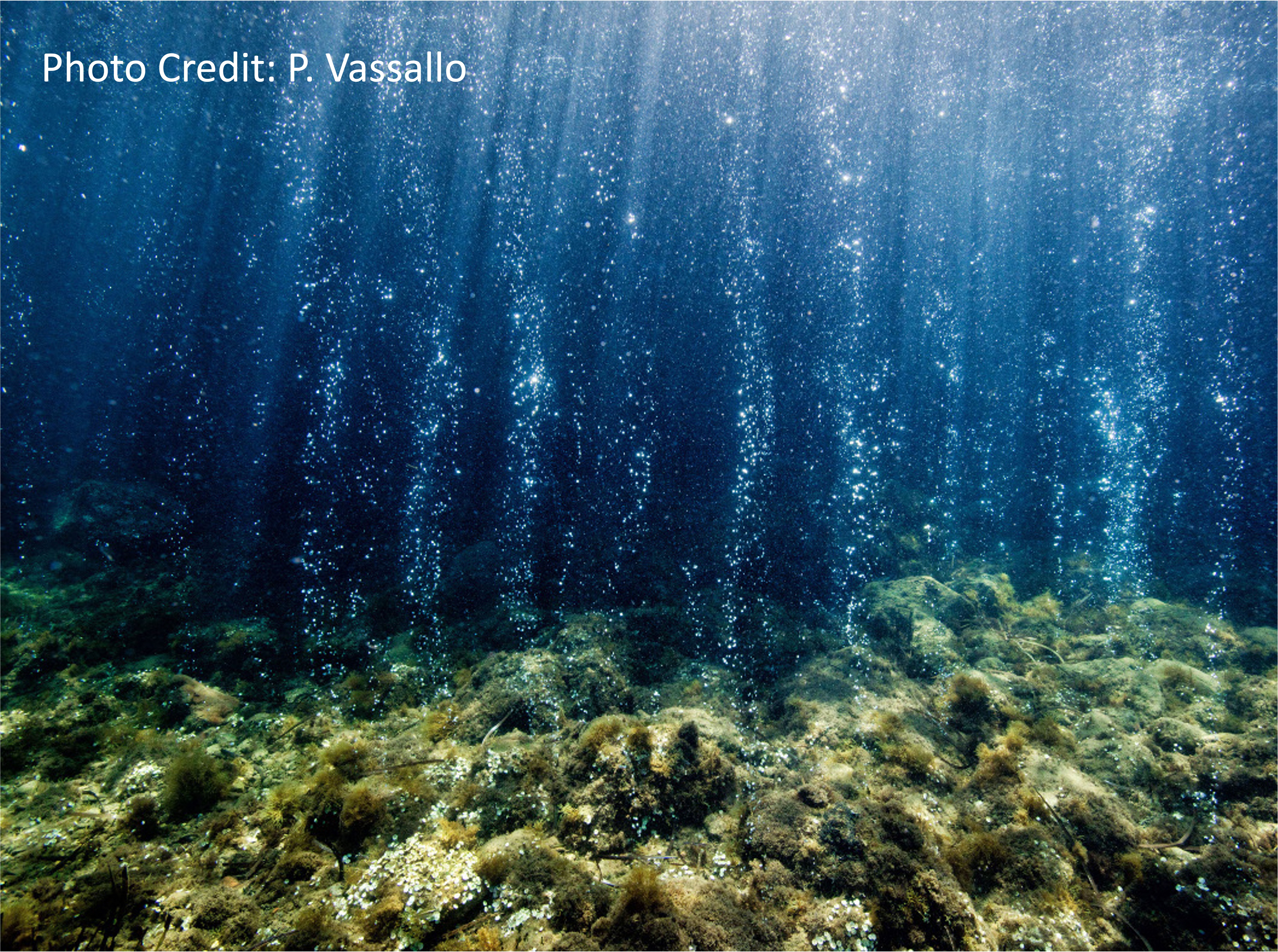
We aim to understand how global stressors alter community processes, ecosystem structure, and ecosystem functioning by leveraging natural stress gradients (e.g., shallow volcanic CO₂ vent systems) and extreme climate events as natural experiments. In particular, our current research focuses on ecosystem recovery in coastal vegetated habitats under increasing frequency and intensity of marine heatwaves, and on how species interactions mediate these recovery trajectories.

Ecosystem Restoration
Restoration interventions across a wide range of coastal ecosystems have increased rapidly in recent years, driven in part by global initiatives such as the UN Decade on Ecosystem Restoration (2021–2030). Despite this momentum, our understanding of the factors governing the long-term effectiveness and sustainability of restoration outcomes remains limited. In particular, it is still unclear whether and how negative and positive species interactions can be strategically leveraged to enhance restoration success.
Our research in salt marshes, seagrass meadows, and oyster reefs focuses on the roles of predators and facilitative secondary foundation species in promoting habitat recovery and the restoration of key ecosystem functions.

Biological Invasion
Exotic marine species pose significant threats to native species and ecosystems. Many of these species exhibit remarkable resilience and ecological flexibility, allowing them to adapt to novel environments while maintaining strong competitive abilities. With intensifying human disturbance and ongoing climate change, the frequency and magnitude of marine biological invasions are increasing worldwide. However, the impacts of these invasions on native ecosystem structure and functioning remain poorly understood, particularly outside a limited number of regions and countries.
Our current research integrates large-scale field surveys with manipulative experiments to examine how invasive marine predators affect native foundation species and associated faunal communities.
 MARINE CONSERVATION ECOLOGY