Our lab prioritizes rigorous science, ethical conduct, and respectful collaboration. We strive to maintain an inclusive environment where diverse perspectives are valued and constructive exchange is encouraged.
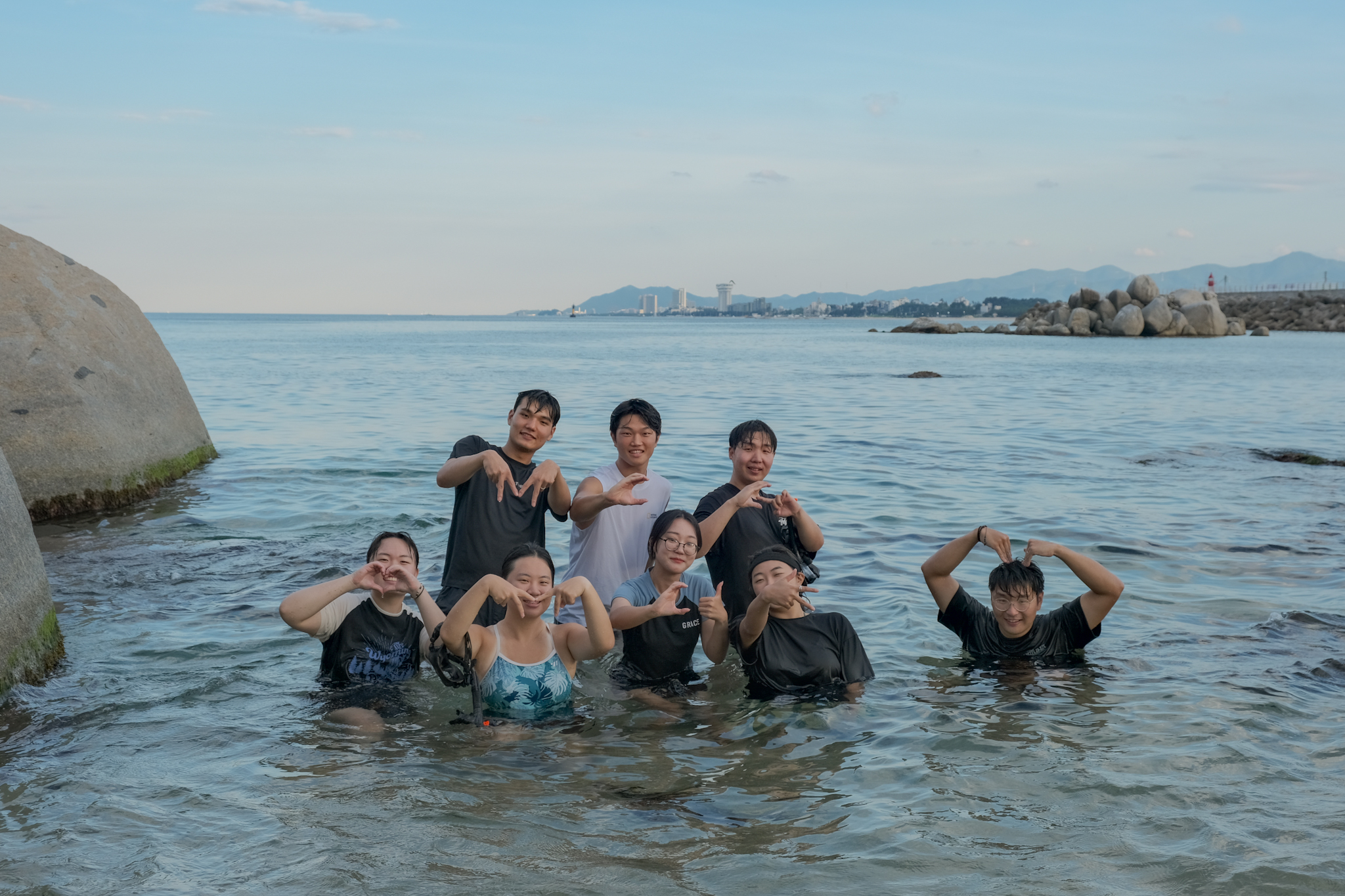
How I approach student training
My goal is to train independent scientists who can think broadly, connect local systems to global ecological questions, and pursue research with relevance beyond a single region or discipline. I welcome students with diverse interests across marine environmental science, conservation, and management, but my strongest mentorship lies in empirical, field-based research and laboratory experiments. Students interested in developing rigorous ecological questions through hands-on science will benefit most from working in my lab.
I invest heavily in mentoring young scientists, beginning at the undergraduate level. Undergraduate students typically spend about a year immersed in lab activities before deciding whether to formally join the lab. During this time, students learn by supporting ongoing projects while gradually developing their own research ideas. When there is a strong fit, I actively invest my time and research resources to help these projects grow into graduate-level research. I am always looking for motivated students interested in pursuing high-level PhD work in marine ecology and conservation science.
Because our work is strongly field-based, I expect students to develop independence in field logistics and essential field skills (e.g., driving), and to build additional competencies as needed (e.g., boating or diving). I also expect students to value honesty, sustained effort, and self-motivation, qualities that are essential for both good science and productive mentorship. In return, I commit substantial time to training my students in scientific thinking, writing, and oral communication in both their native language and English.
I strive to maintain an inclusive, respectful lab environment that supports students from diverse backgrounds and prepares them to engage with the global scientific community. Ultimately, I want my students to leave the lab as confident, capable scientists who are well equipped to contribute meaningfully to marine ecology and conservation at an international level.
If you are a prospective graduate student or an undergraduate interested in joining our lab, please reach out to lee.juhyung@pusan.ac.kr .
 MARINE CONSERVATION ECOLOGY